




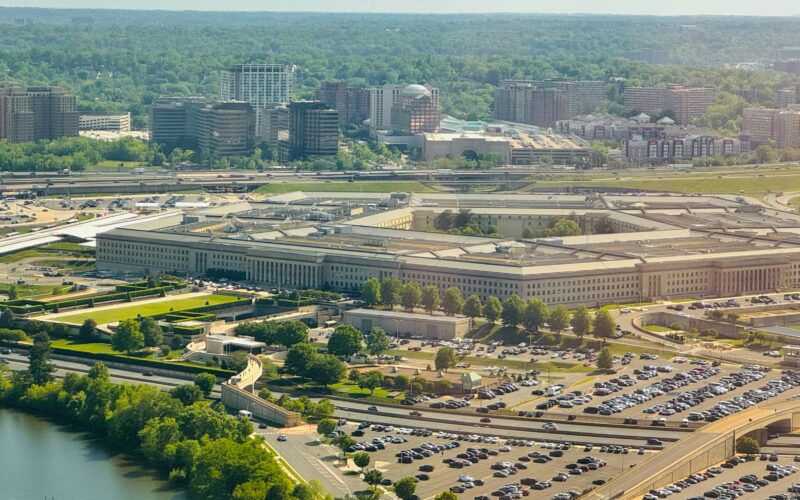
The Oracle Pentagon contract is official, and it is one of the largest software deals in US government history. The Department of Defense announced on Thursday that it has awarded Oracle a 10-year agreement worth up to $7 billion. Furthermore, it covers the entire US military, the Coast Guard, and the intelligence community. Here is everything you need to know about the deal and what it means for Oracle, taxpayers, and the defense technology sector.
What the Oracle Pentagon Contract Covers
The scope of this agreement is sweeping. Specifically, it touches every major branch of American defense. According to Reuters, the Pentagon announced a nearly $7 billion, up-to-10-year agreement with Oracle to consolidate the department’s on-premises software licenses into a single contract, covering the Defense Department, the US Coast Guard, and the intelligence community.
Furthermore, the CIA was named as Oracle’s first customer under the agreement. Specifically, the contract is structured as an indefinite-delivery, indefinite-quantity vehicle. As a result, authorized organizations across the Pentagon can place orders for Oracle’s on-premises software, SaaS applications, support, and professional services at pre-negotiated pricing.
The Financial Structure
The deal is built in two stages. Specifically, the base period covers the first five years. According to World Today Journal, the contract carries a base value of $3.31 billion for an initial five-year ordering period, with a further five-year option that takes the total ceiling to $6.99 billion.
Furthermore, the savings figure is concrete and independently verified. Specifically, Kirsten Davies, the Defense Department’s chief information officer, said the contract would drive at least $441 million in taxpayer savings. As SiliconAngle reported, Davies cited “fundamentally improving how we procure on-premises Oracle capabilities” as the key driver of those savings.
Why the Pentagon Is Consolidating Onto Oracle
The contract reflects a deliberate strategy. Specifically, the Pentagon has been fragmenting its software purchases across dozens of separate agreements for years. Furthermore, that fragmentation created duplicated costs, inconsistent pricing, and administrative complexity.
Consolidating the entire Department of Defense onto a single enterprise software agreement with one vendor eliminates that overhead. Additionally, bulk purchasing at this scale gives the government significantly more negotiating leverage on price. Consequently, the $441 million in savings comes not from switching vendors, but from buying smarter.
What This Means for Oracle
The deal is a significant win for a company under considerable investor pressure. Specifically, Oracle’s stock has fallen 38% in 2026 amid concerns that AI could erode demand for legacy enterprise software. According to CNBC, Oracle shares rose approximately 3% in extended trading following the announcement.
Furthermore, the timing matters. Specifically, Oracle cut approximately 21,000 jobs earlier this year as it restructured around AI infrastructure spending. Additionally, Larry Ellison, Oracle’s co-founder, has cultivated a close relationship with the Trump administration, having appeared at the White House in January 2025 alongside SoftBank’s Masayoshi Son and OpenAI’s Sam Altman. Therefore, the contract win is both financially significant and politically symbolic.
The Investor Question: Revenue Recognition
Despite the headline number, analysts urge caution on timing. Specifically, a $7 billion ceiling does not mean $7 billion in immediate revenue. Furthermore, the indefinite-delivery structure means orders are placed as needed, not front-loaded.
As Simply Wall St noted, key questions include how quickly this agreement converts into recognized revenue and whether it leads to additional awards across US and allied government agencies. Additionally, Oracle carries a high level of debt, which limits financial flexibility during contract ramp-up. Therefore, investors should watch for revenue conversion commentary in the next two earnings calls.
The Bigger Picture: Legacy Software Versus AI
The Oracle Pentagon contract raises a question that goes beyond one company. Specifically, it asks whether AI really does render traditional enterprise software obsolete. Furthermore, the Pentagon’s decision to lock in a 10-year on-premises software deal suggests the answer is more nuanced than AI enthusiasts assume.
As TechEchelon observed, the deal signals that enterprise software incumbents are holding ground against hyperscalers in defense, not losing it. Specifically, the military depends on on-premises data centers for classified operations that cannot move to public cloud platforms. Consequently, Oracle’s database, ERP, and infrastructure products remain deeply embedded in systems that have no near-term path to replacement.
What It Means for the Defense Tech Sector
The contract sets a precedent for how large government agencies approach software consolidation. Specifically, other agencies watching the Pentagon’s model may follow with similar umbrella agreements. Furthermore, it signals that the defense technology market remains viable for established vendors, not just AI-native startups.
For investors and founders in defense tech, a few lessons stand out. First, incumbency and deep integration still matter enormously in government. Second, the savings argument, not the innovation argument, often wins large procurement battles. Third, on-premises and sovereign computing remain critical requirements for national security that cloud providers cannot yet fully satisfy.
The Oracle Pentagon contract is a reminder that the most transformative technology stories are not always the flashiest. Sometimes a 10-year database deal is exactly the kind of durable, strategic win that outlasts a thousand AI press releases.
This article is for informational purposes only and does not constitute investment advice.
You may be interested in this article: AI Stocks Rebound After Micron’s Blowout Forecast Reignites the Chip Rally.