



A potentially habitable super-Earth has been discovered just 25 light-years away, making it one of the closest candidates for a world that could support life ever found. The discovery has excited astronomers and reignited one of science’s most compelling questions: are we alone? Here is what scientists found and why it matters.
The Habitable Super-Earth Discovery
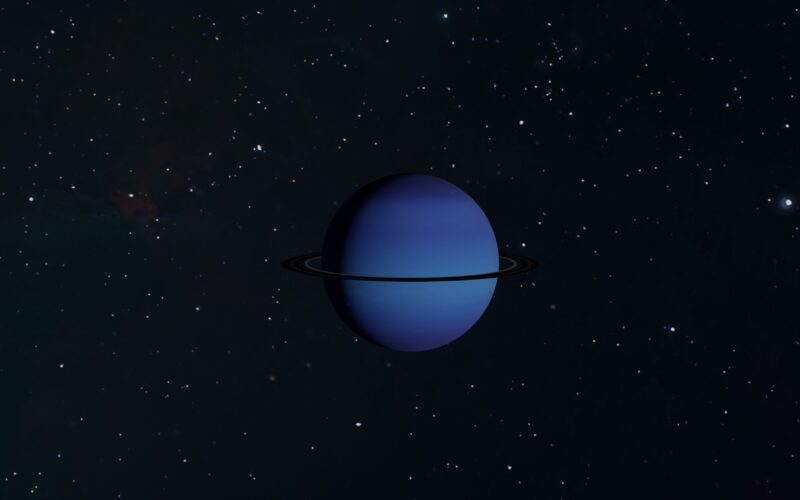
The finding came from a team at UC Irvine. The details are striking. According to Sci.News, astronomers discovered a rocky exoplanet about twice Earth’s size just 25 light-years away, orbiting in the habitable zone of its parent star, Gliese 3378.
The habitable zone, sometimes called the “Goldilocks zone,” is the range of distances from a star where liquid water could exist on a planet’s surface. That condition is considered essential for life as we know it.
At just 25 light-years away, Gliese 3378b is cosmically close. In fact, it is one of the nearest potentially habitable worlds ever identified. That proximity makes it an especially valuable target for future study.
Why a Super-Earth Is Significant
The term “super-Earth” refers to a planet larger than Earth but smaller than Neptune. These worlds are among the most common in the galaxy, yet our own solar system contains none.
Super-Earths in the habitable zone are of particular interest. Their larger mass could mean a stronger magnetic field, which helps protect a planet’s atmosphere from stellar radiation, a key ingredient for habitability. However, a larger mass also means stronger gravity, which could make the planet very different from Earth in important ways.
What Scientists Will Study Next
Discovery is the beginning, not the end. Researchers will now attempt to characterize the planet in more detail. Upcoming tools will be central to that effort.
The James Webb Space Telescope and the forthcoming Nancy Grace Roman Space Telescope are among the instruments that could help probe the planet’s atmosphere, if it has one. Detecting molecules like water vapor, oxygen, or carbon dioxide would be enormously significant. Above all, any biosignature — a chemical sign of life — would represent one of the most important discoveries in history.
Other Big Science Findings This Week
The exoplanet discovery arrived alongside other notable science news. Vitamin C research offered practical health insights. A study of more than 2,000 older adults in Japan found that people with lower vitamin C levels in their blood also tended to have less gray matter in key brain regions involved in memory and attention.
Environmental science also produced an actionable finding. Researchers reviewing studies from around the world found that mixing small amounts of water into diesel fuel can dramatically reduce harmful emissions, including nitrogen oxides and soot, while maintaining or even improving engine performance.
The Bigger Picture
For the search for life beyond Earth, the habitable super-Earth discovery is genuinely exciting. It does not confirm life exists there. However, it adds one more promising candidate to a growing list.
As telescopes become more powerful and search techniques improve, the catalog of potentially habitable worlds will only grow. Each new discovery narrows the gap between wondering whether life exists elsewhere and finding out. Today’s answer is not yet. But the question feels closer than it ever has.
You may be interested in this article: NASA’s Roman Space Telescope Could Discover 100,000 New Exoplanets