




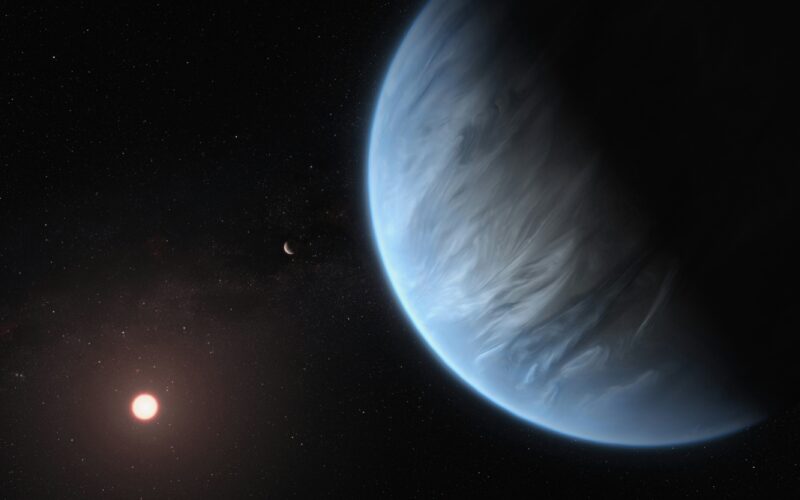
The hunt for worlds beyond our solar system is about to enter a dramatically new phase. NASA’s Nancy Grace Roman Space Telescope, now preparing for launch, could expand the catalog of known exoplanets by an order of magnitude.
The telescope could revolutionize the search for alien worlds by discovering around 100,000 exoplanets, far more than all previous missions combined. To put that in perspective, decades of effort across multiple missions have confirmed several thousand exoplanets; Roman aims to find tens of times that number in a single mission.
The telescope’s launch timeline has been moving up. NASA’s Roman Space Telescope is now aiming for an earlier launch in September 2026, designed to explore dark matter, dark energy, and distant exoplanets while capturing massive, ultra-detailed surveys of the cosmos. Its power lies in its wide field of view, which lets it survey enormous swaths of sky in remarkable detail, a capability that opens up entirely new kinds of astronomical census-taking. Beyond planets, the mission could also expose a vast hidden population of neutron stars across the Milky Way by detecting subtle shifts in starlight caused by gravity.
Roman arrives during an extraordinarily productive stretch for space science. The James Webb Space Telescope recently solved a decades-old mystery about Saturn’s changing rotation rate, and discovered a giant planet nearly 700 light-years away with a bizarre daily weather cycle in which mineral clouds appear each morning and vanish by nightfall. Other recent findings include evidence that moons around rogue planets wandering the galaxy could remain warm enough to support life thanks to tidal heating, and NASA testing a radiation-hardened AI space chip that could let spacecraft operate far more independently in deep space.
The significance of Roman’s exoplanet haul goes beyond sheer numbers. A catalog that large would allow astronomers to study planetary systems statistically, understanding not just individual worlds but the broad patterns of how planets form and distribute themselves across the galaxy. It could sharpen our sense of how common Earth-like worlds really are, a question that sits at the heart of one of science’s oldest inquiries: whether we are alone.
As the September launch window approaches, anticipation is building for a mission that could redraw our map of the cosmos and, in doing so, reshape how we understand our own place within it.