



The NASA Psyche spacecraft aced a critical Mars flyby this week, marking a significant milestone on its journey to one of the most unusual objects in our solar system. Furthermore, the spacecraft not only used Mars’s gravity to accelerate but also tested its scientific instruments in the process. Here is what happened during the flyby and what the mission is ultimately chasing.
NASA Psyche Spacecraft Mars Flyby: What Happened
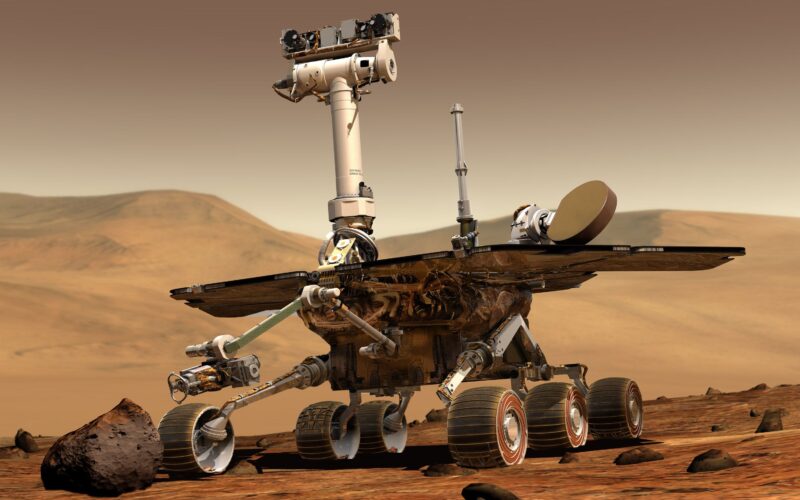
The maneuver combined navigation and science. Specifically, Mars served as both a speed boost and a testing ground. According to ScienceDaily, NASA’s Psyche spacecraft aced its Mars flyby, using the planet’s gravity to speed toward its 2029 encounter with a metal-rich asteroid, while the spacecraft tested its cameras, magnetometer, and other instruments.
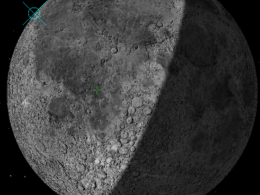
Furthermore, the flyby produced striking visual results. Specifically, Psyche captured a stunning time-lapse video of Mars during the pass. As a result, the mission team confirmed that the spacecraft’s instruments are performing as expected, clearing a critical technical milestone ahead of the asteroid encounter.
What Psyche Is Flying Toward
The ultimate destination is unlike anything humanity has visited. Specifically, the target is the asteroid 16 Psyche. Furthermore, scientists believe it may be the exposed metallic core of a protoplanet that was stripped of its rocky outer layers billions of years ago by ancient collisions.
If that theory is correct, visiting Psyche would give scientists their first direct look at the type of material that makes up the cores of rocky planets like Earth. Consequently, the mission could answer fundamental questions about how planets form and what lies deep beneath our own feet.
A Black Hole Story Equally Stunning
The Mars flyby was one of two extraordinary space stories this week. Specifically, NASA’s Swift Observatory captured something rare and violent. According to ScienceDaily, NASA’s Swift Observatory observed a supermassive black hole ripping apart a star more than 30,000 light-years from the center of a distant galaxy, with the extraordinary flare briefly outshining the entire galaxy and blazing like 10 billion suns.
Furthermore, the event is classified as a tidal disruption event. Specifically, these occur when a star wanders too close to a black hole and is torn apart by gravitational forces. As a result, the material spirals inward while releasing an enormous burst of energy visible across billions of light-years.
Why Deep Space Science Matters for Technology
The instruments aboard Psyche are not just scientifically valuable; they push the limits of engineering. Specifically, the spacecraft uses solar electric propulsion, which is far more efficient than conventional chemical rockets over long distances. Furthermore, its communication systems test advanced laser optical communications technologies.
Consequently, technologies developed for deep-space missions like Psyche often find applications in Earth-based systems, from more efficient power management to better long-distance communication. Therefore, every mission like this generates returns that extend well beyond what the telescope or camera directly observes.
The Road to 2029
With the Mars flyby successfully completed, Psyche is on track for its 2029 asteroid arrival. Specifically, the three-year journey involves precisely calculated orbital mechanics. Furthermore, the spacecraft will spend approximately 26 months in orbit around the asteroid, mapping its surface and measuring its composition.
For space enthusiasts and scientists alike, the mission offers a rare opportunity to glimpse a world utterly unlike our own, a giant ball of metal floating in the asteroid belt. The NASA Psyche spacecraft Mars flyby confirms that journey is on course.
You may be interested in this article: NASA’s Roman Space Telescope Could Discover 100,000 New Exoplanets