



A SpaceX rocket crashes into the moon today, and it is happening right now. Specifically, an abandoned Falcon 9 upper stage, a piece of space junk drifting for 19 months, is predicted to slam into the lunar surface at 6:35 am UTC on August 5, 2026. Furthermore, scientists around the world are watching, and you might be able to see the aftermath. Here is everything confirmed about today’s historic lunar impact.
SpaceX Rocket Crashes Into Moon: The Basic Facts
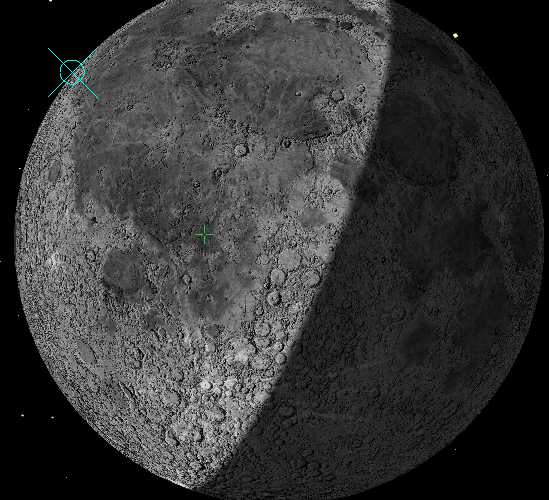
The object heading toward the moon is not a new spacecraft. Specifically, it is a leftover rocket stage from a January 2025 mission. EarthSky confirmed that the spent upper stage of a SpaceX Falcon 9 rocket, catalogued as 2025-010D, is on course to slam into the lunar surface on August 5, 2026, at approximately 06:35 UTC, near the Einstein Crater on the moon’s western limb.
Furthermore, the scale of the impact is significant. Specifically, the upper stage weighs approximately 4,000 kilograms and is travelling at about 8,750 kilometres per hour. According to Time, the impact will release a blast equal to approximately 15,000 sticks of dynamite, producing a considerable debris plume. As a result, the collision is expected to create a crater roughly 20 to 30 metres wide.
Why Nobody Planned This
This impact was not a deliberate mission. Specifically, it is the unintended consequence of how the launch unfolded. According to Newsweek, the object is the spent upper stage from the launch that sent Firefly’s Blue Ghost-1 lander to the moon on January 15, 2025.
Furthermore, after releasing its payloads, the upper stage lacked enough fuel to return to Earth’s atmosphere. Specifically, it kept orbiting Earth but never re-entered. Consequently, gravitational forces gradually pulled it toward the moon over 19 months until today’s inevitable impact.
Who Is Tracking It
The prediction came from independent astronomers, not NASA. Specifically, one prolific asteroid tracker led the effort. According to Forbes, astronomer Bill Gray, author of the Project Pluto website, calculated the impact date and location using publicly available data and software he wrote himself.
Furthermore, the scientific community mobilised around the discovery. Specifically, a paper on arXiv called on both professional and amateur astronomers to observe the event. As Phys.org confirmed, the collision is a rare opportunity to record an artificial impact in real time, and scientists aim to test a new method for pinpointing exactly where objects strike the moon.
Can You See It From Earth?
The honest answer is: with difficulty. Specifically, the impact location is close to the moon’s limb as seen from Earth. According to EarthSky, the impact will be close to the edge of the moon as seen from Earth, making direct observation harder than initially hoped.
However, the dust plume may be visible to advanced amateur astronomers. Specifically, some predictions suggest the ejecta could rise a few miles above the lunar surface. Furthermore, observers in parts of North and South America have the best view. As a result, anyone with a telescope and a clear sky should point it toward the moon’s western edge in the early morning hours.
Why This Is Scientifically Important
Beyond the spectacle, today’s impact has genuine scientific value. Specifically, it tests methods that will matter for future lunar exploration. According to Discover Magazine, NASA’s Lunar Reconnaissance Orbiter will observe before and after, documenting the new crater to advance our understanding of impact physics.
Furthermore, the event highlights a growing challenge. Specifically, as humanity launches more rockets and missions, the moon is accumulating debris. Consequently, understanding where that debris lands and what craters it creates will be important as NASA and others plan permanent lunar infrastructure.
This article is based on confirmed tracking data from Project Pluto, EarthSky, Newsweek, Forbes, Discover Magazine, and Time, published August 4-5, 2026.
You may be interested in this article: NASA Psyche Spacecraft Aces Mars Flyby on Its Way to a Metal-Rich Asteroid