




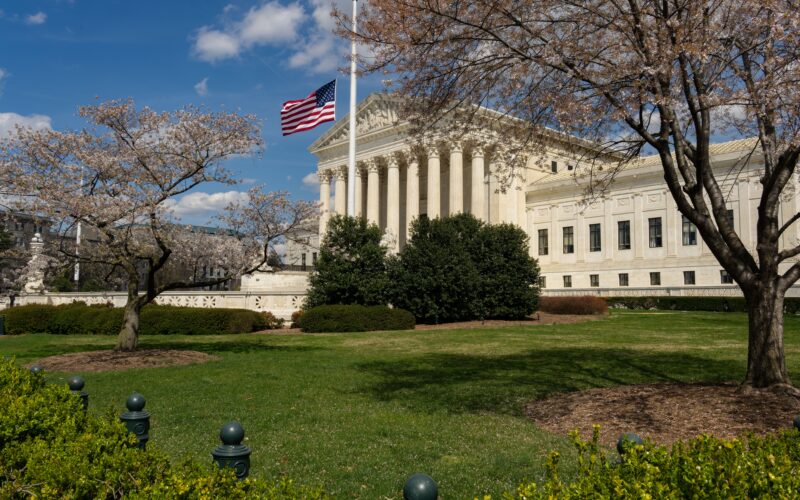
A major Supreme Court Fed ruling has reshaped the fight over who controls America’s central bank. On Monday, the justices blocked President Trump from firing Federal Reserve Governor Lisa Cook, at least for now. The decision protects the Fed’s independence, a principle with direct consequences for interest rates and your money. Here is what happened.
What the Supreme Court Fed Ruling Said
The court delivered a clear setback to the president. It rejected his attempt to remove Cook. The Supreme Court ruled Monday that President Donald Trump does not have the authority to fire Federal Reserve Governor Lisa Cook from the central bank for now, though the opinion leaves open the possibility of dismissing her in the future.
The vote was close. The Supreme Court blocked the firing in a 5-4 vote, ruling she can remain on the job as her legal challenge proceeds. As a result, the case now returns to lower courts. She will remain in her job in the meantime.
Why the Fed’s Independence Matters
The ruling matters far beyond one person’s job. It protects a core principle of how the economy is managed. Congress sought to insulate the Fed board from destabilizing political pressures by setting limited 14-year terms and providing that members could be fired only for cause, meaning neglect of duty or malfeasance in office. Federal Reserve
The concern was about political control over interest rates. No president until Trump had tried to fire any of the Fed’s board members, and were Trump to ultimately succeed in firing Cook, there is little doubt he would try to fire others so he could name a majority of the board. A justice warned of the stakes. Kavanaugh said the argument that a president could fire any Fed governor for cause without judicial review “would weaken, if not shatter, the independence of the Federal Reserve.” Federal Reservenewsonair
The Background to the Case
The dispute began nearly a year ago. It centered on a fraud allegation. The ruling came nearly nine months after Trump said he was firing Cook because she had been accused by a Trump-appointed official of committing mortgage fraud before becoming a Fed governor.
Cook denied the claim and pointed to a different motive. “This was never about mortgage documents signed years before I became a Federal Reserve governor,” Cook said, calling it an attempt to remove her “because I refused to bow to political pressure” on interest rates. newsonair
Why It Matters for Your Wallet
The Fed’s independence affects everyone’s finances. The central bank sets interest rates based on economic data. Those rates influence what you pay on mortgages, credit cards, and loans, and what you earn on savings.
The worry is that political pressure could push rates in a direction that helps a president politically but harms the economy. Trump has repeatedly pushed for lower rates. An independent Fed, by contrast, is meant to make those calls based on evidence alone. Therefore, this ruling helps preserve a system designed to keep your money safe from short-term political swings.
What Comes Next
The fight is not fully over. The case returns to the lower courts, which could take considerable time. In a separate ruling the same day, the court actually expanded the president’s power over other agencies, showing it treated the Fed as a special case.
For now, a few takeaways stand out. First, the Fed’s independence remains intact, which markets generally view as stabilizing. Second, the broader legal battle continues. Third, interest rate decisions will keep being made by the Fed’s current board. As this plays out, the principle at stake remains one of the most important in economic policy.
This article is for informational purposes only and does not constitute financial advice.
You maybe interested in this article – Fed Holds Rtaes Steady in Warsh’s First Meeting: What it means for yout Money